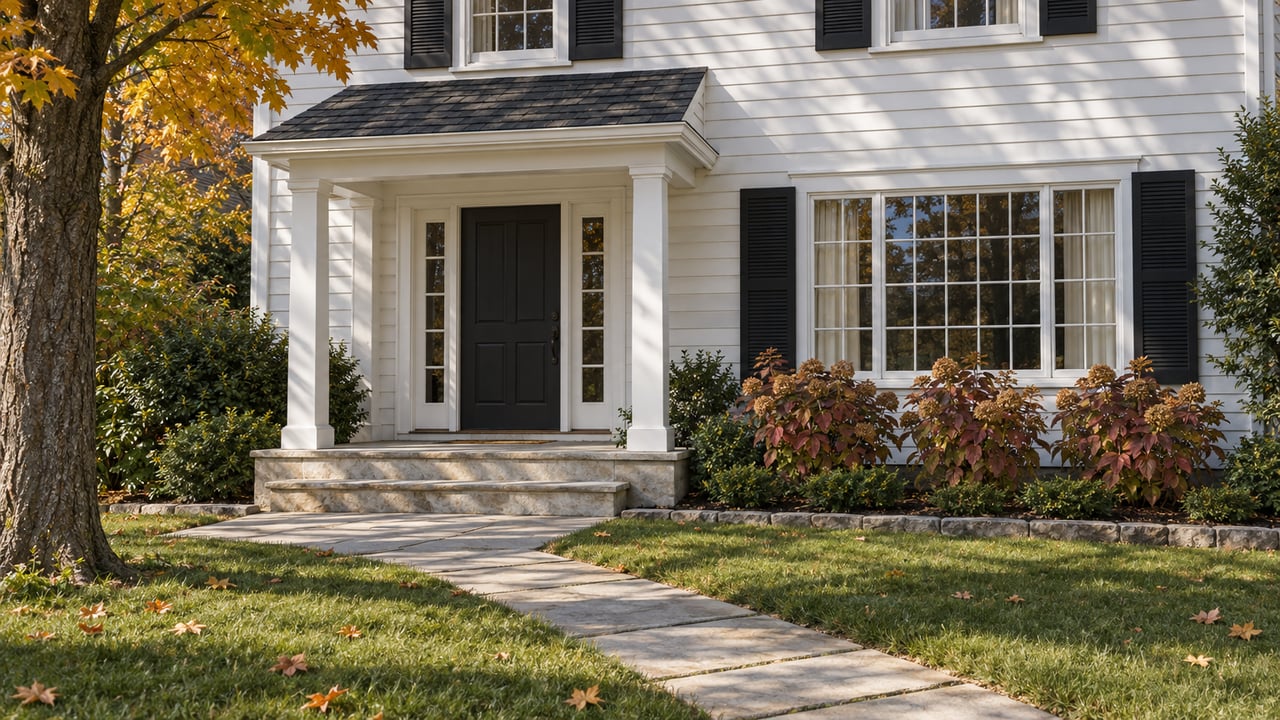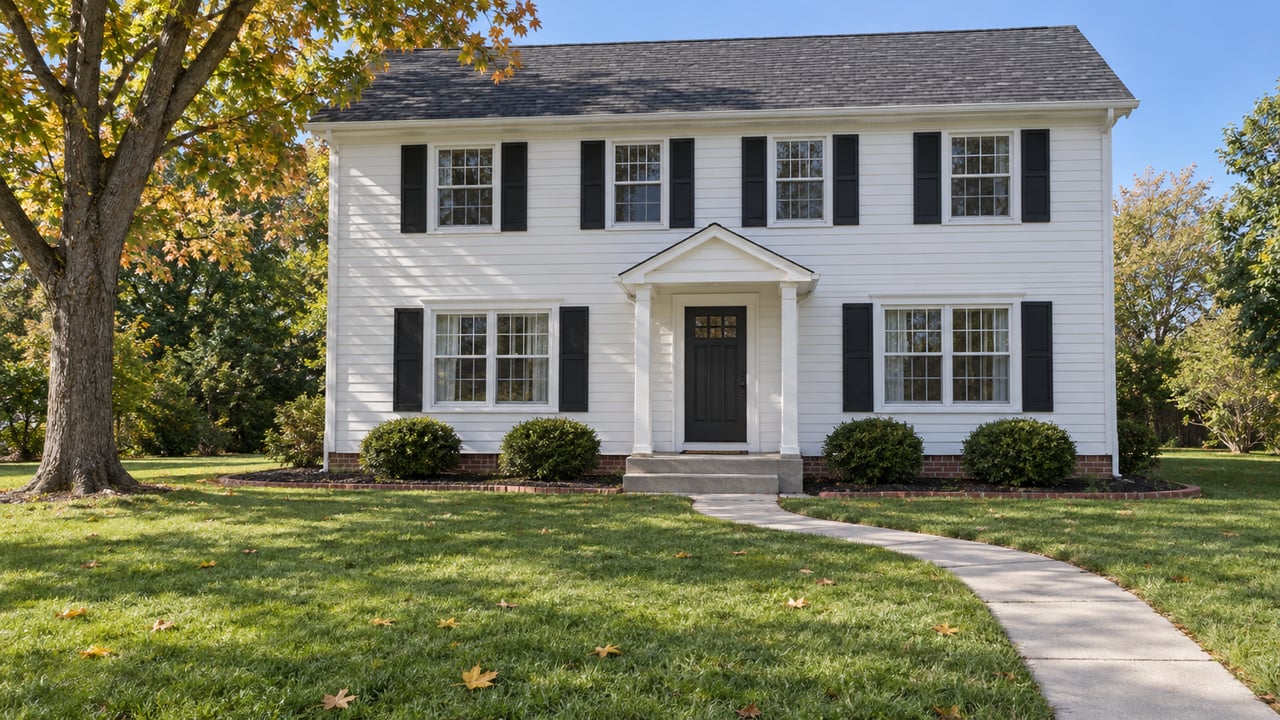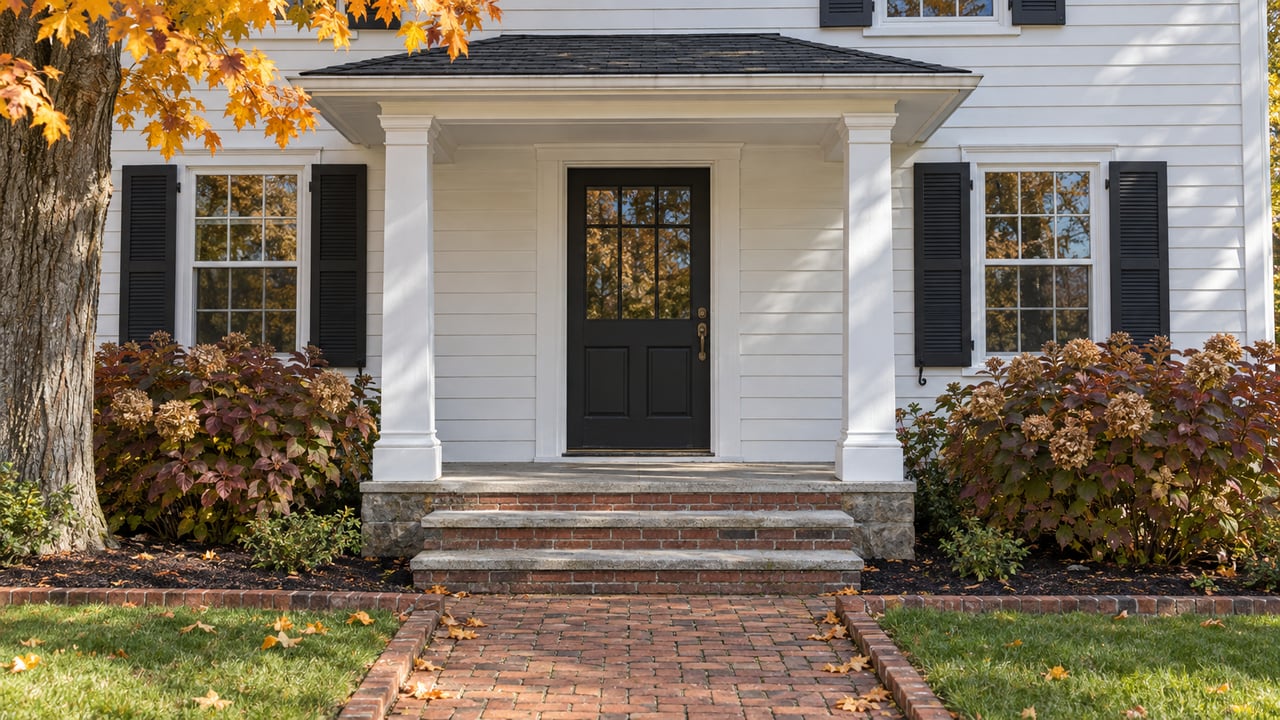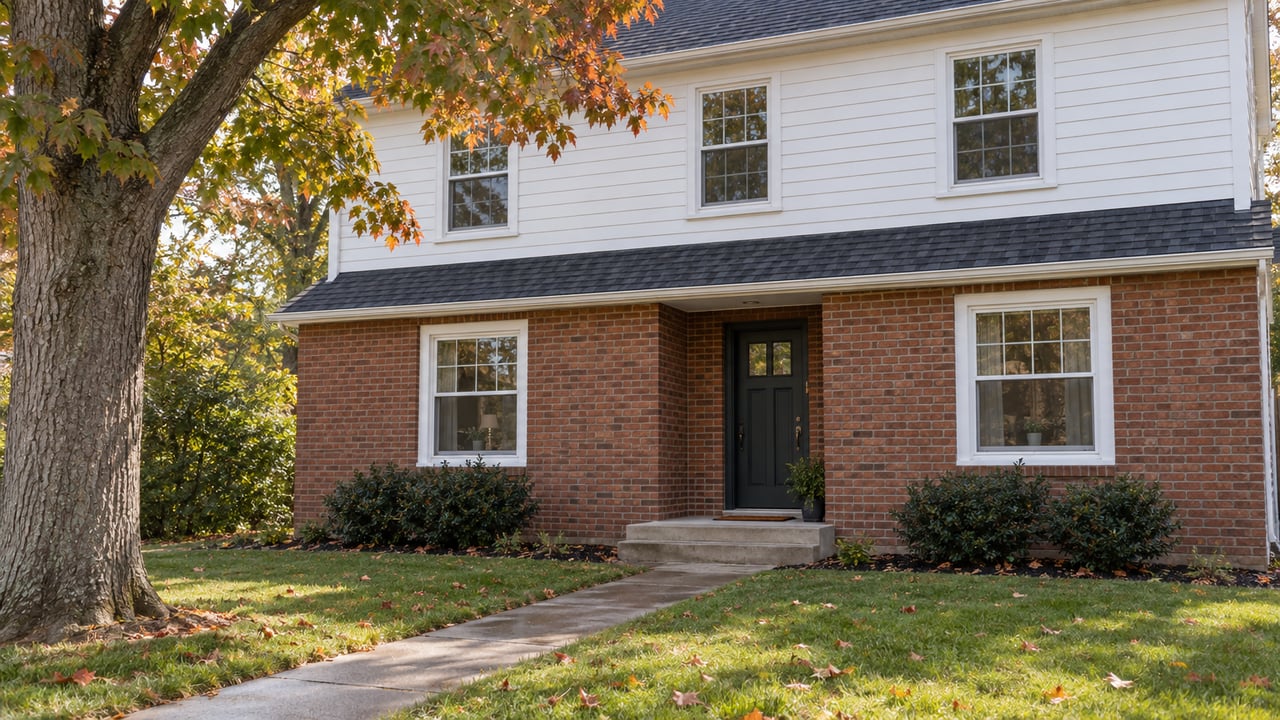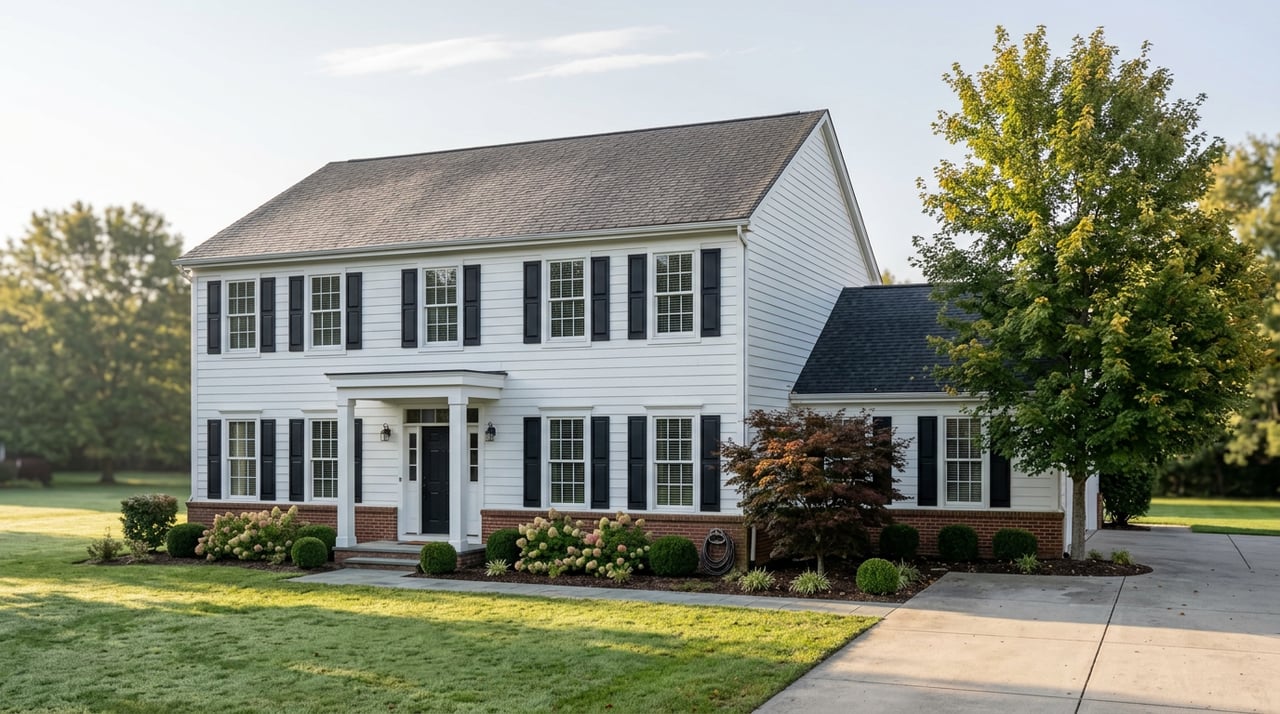
This year, a home just outside Clarkston listed at $475,000 and closed near $501,000, about five percent over asking. Around the same time, a home in Bloomfield Hills listed at $725,000 and sold at full asking price almost immediately. A third home, out in Oakland Township, listed just under $1.9 million and closed nearly eight percent below that number after 38 days on the market.
Three Oakland County homes. Three completely different outcomes. If you had only the county's median sale price in front of you, roughly $395,000 to $397,000 depending on whether you're reading Realcomp's June 2026 closings or Redfin's rolling three-month window through July, you would have no way to predict any of it. That gap between the number everyone quotes and the number that actually applies to your search is the thing worth understanding before you start comparing cities.
What the median is actually averaging
Oakland County's median sale price is not a description of any single place to live. It is an average of Southfield, where the median sale price sat in the $240,000s to $247,000 range through much of 2026, and Birmingham, where the median sale price ran north of $1 million that same year. Those two cities sit fifteen minutes apart on the map and occupy almost no shared territory in price.
That spread is the widest of any county in Metro Detroit, and it is wide on purpose. Oakland County contains both the region's most affordable entry points and its most expensive addresses, often within the same school district boundaries. A single county-wide number has to average across all of it, which means the number describes the average, not any actual house you could buy.
Here is roughly where the pieces sat through the middle of 2026:
| City | Approximate 2026 median sale price | What's different about the pace |
|---|---|---|
| Southfield | Low $240,000s | Trackers disagree: one puts homes selling in about 29 days, another closer to 43 |
| Farmington Hills | Around $395,000 as of June 2026 | Sits well below Novi's median despite sharing a border |
| Troy | Around $400,000 | Sales volume climbing faster than price, a sign of steady demand rather than a price run-up |
| Novi | Around $548,000 as of June 2026 | Newer construction is pulling the city average upward |
| Birmingham | Just over $1 million | The county's highest median, built from a thin slice of monthly sales |
Each row on that table is its own market. None of them behaves like the county median, and none of them behaves like each other.
Why the same price point produces different outcomes
Go back to those three sales at the top of this post. All three closed in 2026. All three were single-family homes in Oakland County. And all three tell you something different about where leverage actually sat that month.
The Clarkston-area home selling five percent over its asking price suggests a property that was priced to invite competition, in a pocket where buyers were still willing to stretch. The Bloomfield Hills home selling at full asking price with no negotiation at all suggests a seller who priced it accurately from day one and a buyer who agreed. The Oakland Township home closing eight percent under its original list price after more than a month on the market suggests something else entirely, likely an initial price that outran what buyers in that specific price band were willing to pay.
None of those outcomes is unusual on its own. What is unusual is finding all three within the same county, in the same general window of time, at price points that aren't even that far apart relative to Oakland County's overall range. Being in a desirable community does not guarantee the same result as the last home that sold nearby. Condition, lot, presentation, and where a listing sits relative to the most recent 90 days of comparable sales matter more than the zip code alone.
Birmingham's number is a good example of how thin data misleads
Birmingham's median sale price of roughly $1.02 million in June 2026 is a real number pulled from real closings. It is also worth holding loosely, because the typical home value across the entire city, measured by an index that tracks every property rather than just the handful that changed hands that month, sits closer to $750,000.
That's not a contradiction. It's a reminder that Birmingham has a small number of monthly sales relative to Troy or Novi, so one or two high-end closings can pull a single month's median well above what a typical Birmingham home is actually worth. If you're shopping in Birmingham using a single month's median as your reference point, you may be anchoring to a number shaped by a few outlier transactions rather than the broader market.
Southfield's number is about to mean something different
Southfield's affordability relative to the rest of the county isn't an accident, and it isn't likely to stay static either. The former Northland Mall site is being redeveloped into Northland City Center, a mixed-use district planned across roughly 100 acres with more than 1,500 apartments alongside retail and a hotel. The first buildings began welcoming tenants in 2026.
A project of that scale sitting inside a city with a sub-$250,000 median sale price is worth watching, not because it will move prices overnight, but because it changes what "affordable" means in that submarket over the next several years. Southfield today is the county's value entry point. Southfield in five years, with a live-work-play district anchoring one end of the city, may not carry the same relationship to the county median that it does now.
What to actually ask instead of the median
If you're comparing cities inside Oakland County, the county median is the wrong starting question. A more useful set of questions looks like this:
- What's the median sale price for this specific city over the last 90 days, not the county as a whole?
- How many homes actually sold in that window? A city with a thin sample size will have a noisier, less reliable median than one with high sales volume.
- What's the typical pending timeline in this specific city right now, and does that match what a listing agent is telling you, or does it look more like the county average?
- Has anything nearby changed the trajectory, a new development, a school boundary shift, a major employer move, that the last 90 days of sales might not yet reflect?
Public data backs up how differently the three Metro Detroit counties move even at the county level. Median days-on-market figures tracked through the Federal Reserve's economic data system showed Oakland County homes sitting for a median of 32 days in June 2026, compared with 35 in Macomb County and 45 in Wayne County, using the Realtor.com-sourced days-on-market series published via FRED. If county-level numbers already diverge that much, city-level numbers inside Oakland County diverge more.
A few questions worth answering directly
Does a fast pending timeline in one city mean I should expect a bidding war? Not necessarily. A quick pending timeline can mean strong demand, but it can also mean a market with very few homes listed at all, so the ones that do come up move fast simply because buyers have nothing else to compare them to. Birmingham's thin monthly sales count is a version of the same thing: a handful of closings can move the median without meaning every listing in town is fielding multiple offers.
Is Oakland County a buyer's market or a seller's market right now? It depends entirely on which city and which price band you mean. Inventory across the county rose meaningfully through the first half of 2026, which gives buyers more room to negotiate on listings that have sat past 30 days. At the same time, well-priced homes in strong school districts are still fielding competitive interest within their first two weeks. Both things are true simultaneously, which is exactly why the county-wide framing doesn't hold up.
Why did one source say Southfield homes sell in 29 days and another say 43? Different trackers pull from different windows and different listing pools. One measured a single month with a smaller sample. Another measured a longer stretch with more active listings included. Neither is wrong, but the discrepancy itself is a useful signal that Southfield's pace isn't settled or uniform, which matters if you're timing an offer or a listing there.
Where this leaves you
The Oakland County median is a real number, calculated correctly, and almost useless for deciding where to buy or what to expect from your own sale. The number that matters is the one specific to the city, the price band, and the last 90 days of actual closings in the neighborhood you're considering.
If you're weighing a move across Oakland County, or you're trying to figure out how your own home's numbers stack up against what's actually closing near you right now, Five Star Luxury Realty can walk through the comps that apply to your specific situation rather than the county-wide average. Get a Free Home Valuation and see where your home actually sits, not where the blended number says it should.