Cold rooms upstairs, drafty floors, and high winter bills are common in Detroit’s older homes. If that sounds familiar, you are not alone. The good news is you can tackle the biggest heat losses first and use local rebates and programs to cut the cost. This guide gives you a clear order of operations and shows you how to leverage DTE Energy rebates and other assistance so you save more. Let’s dive in.
Why insulation matters in Detroit
Detroit winters drive most of your annual heating use. In a heating‑dominated climate, heat escapes through the attic, walls, rim joists, and basement. Sealing air leaks and adding insulation slows that loss and boosts comfort. Guidance from the U.S. Department of Energy and ENERGY STAR highlights these measures as top priorities for older homes.
Many Detroit houses were built before modern insulation standards. You often see thin or settled attic insulation, empty wall cavities, and leaky rim joists in basements. Older ductwork can also leak heat into unconditioned spaces. That is why the first projects below usually deliver the fastest payback and the biggest comfort gains.
The first upgrades to do
Attic insulation and air sealing
Start here for the best return. Heat rises, so the attic is a major escape path. Insulation works best when you also seal the gaps that let warm air leak into the attic.
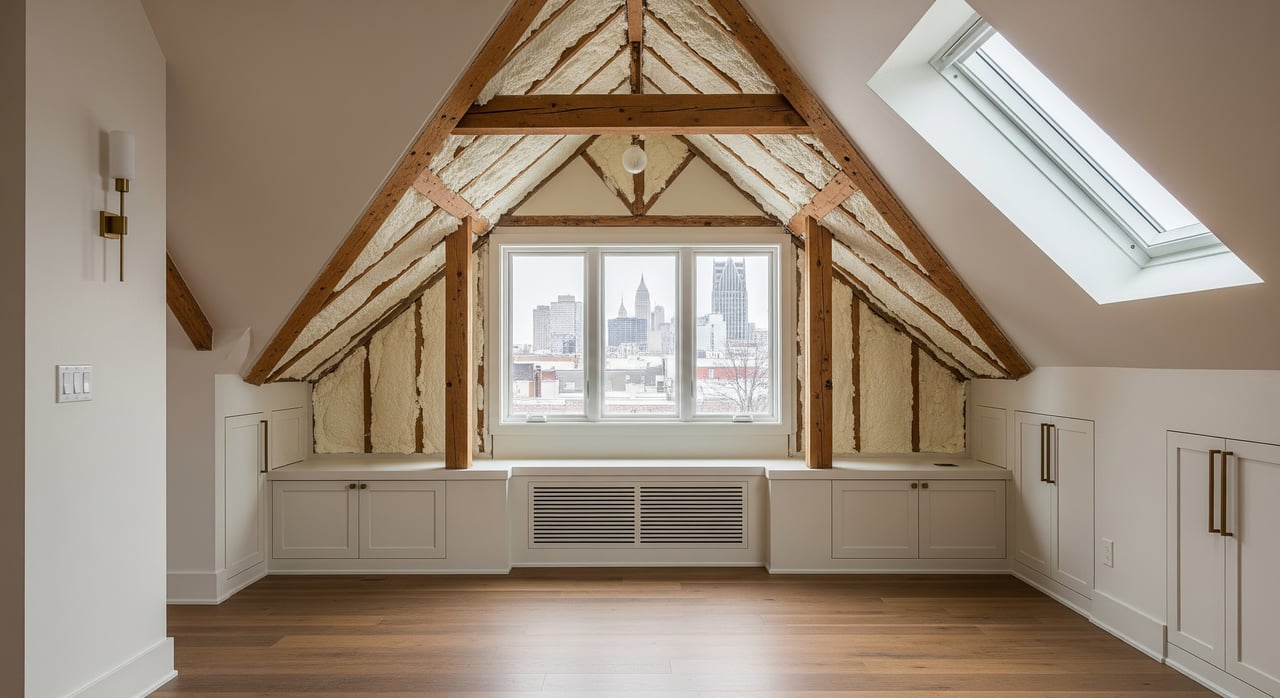
- What to do: Add blown or batt insulation to meet cold‑climate recommendations and seal bypasses such as recessed lights, the attic hatch, chimney chases, and framing gaps.
- Detroit watch‑outs: Address thin or missing insulation at eaves and kneewalls and seal open soffit details while preserving proper ventilation.
- Benefits: Warmer top floors, fewer drafts, and lower heating bills. ENERGY STAR guidance identifies attic insulation plus air sealing as a top cost‑effective step.
Rim joist sealing and air leaks
Air sealing reduces uncontrolled drafts and makes every layer of insulation work better. In older Detroit homes, rim joists are a common weak point.
- What to do: Seal large gaps, weatherstrip doors, and use spray foam or rigid foam at rim joists. Seal utility penetrations.
- Benefits: Fewer drafts, better comfort, and reduced moisture movement when done correctly. DOE and ENERGY STAR support pairing air sealing with insulation for best results.
Basement and crawlspace insulation
Detroit basements are common and often uninsulated. Treating these areas can noticeably improve main‑floor comfort.
- What to do: Insulate basement perimeter walls or crawlspace walls, depending on whether the space is conditioned. Seal and insulate ducts located in unconditioned areas.
- Moisture matters: Pair insulation with proper moisture control. Address vapor management and drainage before or during the project. See DOE resources for best practices.
Wall cavity insulation
This can be a meaningful upgrade after the attic, air sealing, and basement work are complete.
- What to do: Dense‑pack cellulose or fiberglass into wall cavities after a professional assessment of your wall type.
- Benefits: Added comfort and energy savings with less disruption than full remodels.
Targeted upgrades and windows
Window replacement is often a lower priority for pure energy savings than the measures above. You can still capture value by sealing and insulating around window and door frames and by adding storm windows or weatherstripping.
Use DTE Energy rebates the smart way
DTE Energy offers residential rebates for insulation and related measures. Program details change, so begin on the DTE Energy site and review current residential energy efficiency offerings.
Common rebate categories include:
- Home energy assessment or consultation to identify measures and unlock incentives.
- Rebates for attic, wall, and basement or crawlspace insulation.
- Air sealing rebates or combined insulation and air sealing packages.
- Duct sealing and insulation for systems in unconditioned spaces.
- Smart thermostat and HVAC incentives that complement envelope work.
How to navigate rebates:
- Check DTE requirements first. Some measures need pre‑approval or a specific Home Energy Consultation before work begins.
- Confirm if you must use an approved contractor. Many programs require qualified vendors and contractor‑submitted paperwork.
- Get itemized quotes. Ask contractors to list each measure, R‑values added, and whether they handle rebate submissions.
- Keep documentation. Save invoices, pre‑ and post‑work photos, and any test results. Some programs ask for blower‑door data or insulation depth reports.
- Stack correctly. Utility rebates can often be combined with state or federal incentives. Keep records and confirm stacking rules with DTE.
Stack other incentives and assistance
You can reduce out‑of‑pocket costs by pairing DTE rebates with other programs:
- Federal tax credits: The federal government provides tax credits for certain insulation, air sealing, and efficient equipment. Review current rules on the U.S. Department of Energy site and confirm eligibility with a tax professional.
- Weatherization Assistance Program: Income‑eligible homeowners may qualify for no‑cost weatherization services. Learn more about the program through the Weatherization Assistance Program overview.
- Michigan Saves financing: This nonprofit offers financing options you can pair with rebates to spread costs over time. Explore details at Michigan Saves.
- Local programs: Check the City of Detroit’s official site and Wayne County’s site for homeowner repair or weatherization assistance that may apply.
A simple 30‑day plan
- Week 1: Schedule a home energy consultation or audit. Ask for a blower‑door test if available to pinpoint leaks.
- Week 2: Review DTE rebate rules and identify measures needing pre‑approval. Request two to three quotes from qualified contractors.
- Week 3: Prioritize work in this order: attic insulation with air sealing, rim joist sealing, basement or crawlspace insulation and duct work, then wall insulation.
- Week 4: Confirm documentation steps with your contractor. Apply for any financing, and check eligibility for Weatherization Assistance or federal tax credits. Schedule the work.
Make your home more market ready
Comfort and operating costs are top of mind for many buyers. When you address heat loss at the attic, basement, and rim joists first, you improve day‑to‑day comfort while positioning your home as better maintained and more efficient. The right upgrades can support a smoother sale experience by reducing inspection concerns related to drafts or aging insulation.
Ready to plan improvements with resale in mind or to understand how efficiency upgrades may support your pricing strategy? Connect with a local advisor who understands both the market and the practical steps to improve your home.
If you are weighing a sale or purchase in Detroit or nearby suburbs, reach out to Unknown Company for clear guidance and a Free Home Valuation. Let us help you plan your next move with confidence.
FAQs
Which Detroit insulation project saves the most energy first?
- Attic insulation combined with air sealing typically delivers the largest first‑year heating savings in older cold‑climate homes, according to ENERGY STAR and the U.S. Department of Energy.
Do I need an energy audit to get DTE rebates?
- Many DTE offers begin with a home energy consultation or have pre‑approval requirements; start on the DTE Energy site to confirm current rules before work begins.
Can I DIY insulation and still qualify for rebates?
- Some rebates require approved contractors or specific documentation; small DIY tasks can help comfort but may not qualify, so check the DTE Energy requirements first.
Will new insulation cause moisture issues in Detroit basements?
- Proper insulation paired with moisture management and ventilation reduces moisture risks; follow DOE best practices and use qualified contractors for basement and wall work.
Should I replace windows before insulating?
- In most cases, air sealing and insulation offer faster payback than full window replacement; consider storm windows and weatherstripping as lower‑cost complements per ENERGY STAR guidance.
How does Michigan Saves financing work with rebates?
- You can apply for financing through Michigan Saves and pair it with DTE rebates and federal credits; confirm timing and documentation so incentives stack correctly.